BIM 101 · Module 1 — Revit Fundamentals
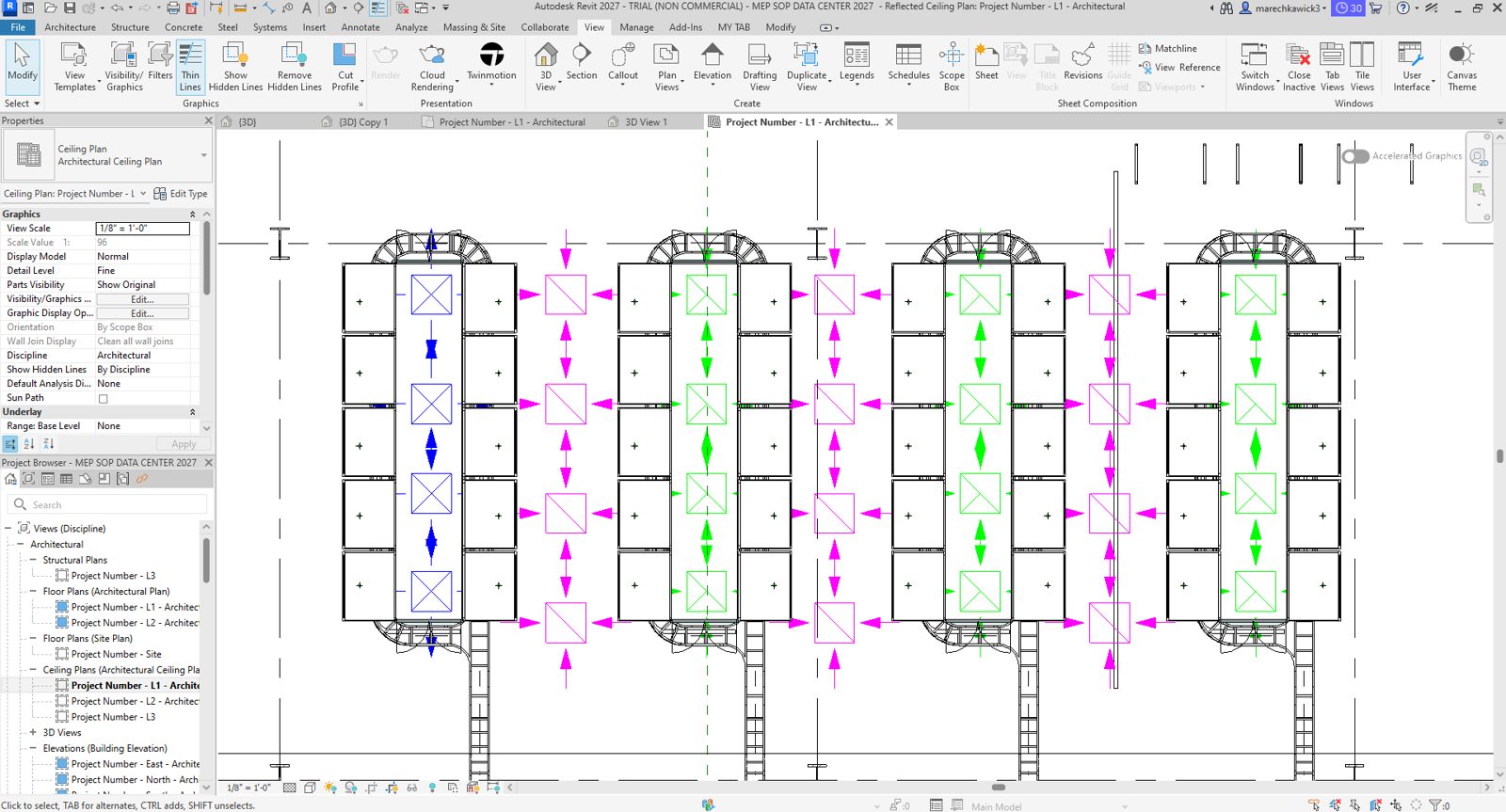
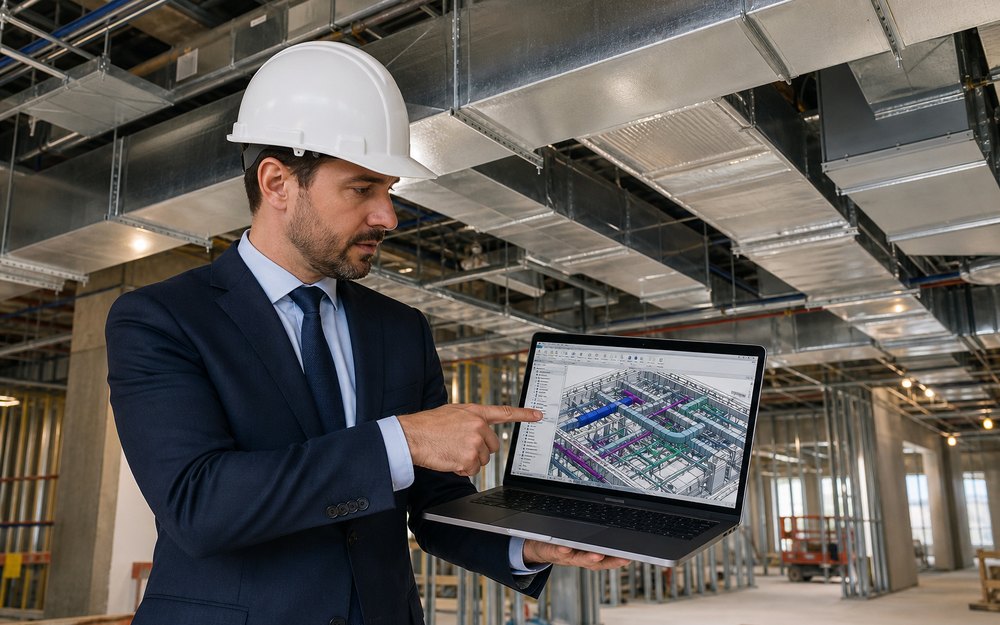
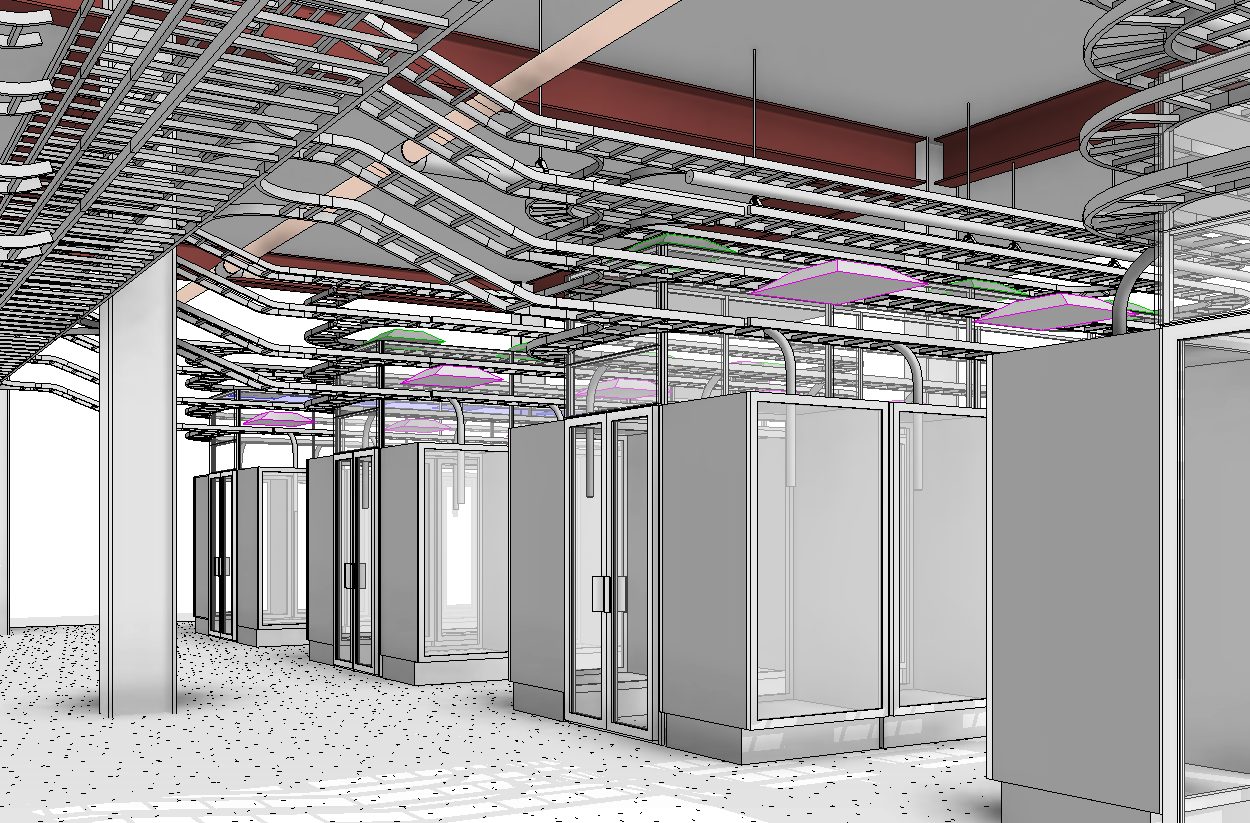
Introduction to Revit & Building Information Modeling. What BIM is and why it changed the industry; the Revit interface; project setup and families; modeling basics; coordination and documentation.
Revit + AI, mission-critical. Siting, power paths, cooling strategy, and coordination taught from first principles — culminating in the interactive site-layout assessment: an open 3D field, a palette of systems, and design rules that grade your configuration.
The periodic table of building competency: four disciplines — Architecture, Structure, MEP, ACC/Forma digital delivery — six chapters each, ninety-six elements of mastery. Every element is a micro module with its own credential; chapters, disciplines, and full mastery certify as the table fills.
What an agent company is; command hierarchies; desks and pipelines; standing patrols; honest status; failure and recovery.
Model economics; reading agent behavior; doctrine as the correction tool; verified external services; cost control at fleet scale.
Personas that work; writing a dossier — mandate, doctrine, refusals; company law across many agents; the elite-standard effect, used honestly.
Specifying to an AI engineer; reviewing without reading code; rejection and force-complete discipline; release rhythm.
Voice as an interface contract; wake words and gating; sound design — chimes that mean things; giving a machine a voice without deception.
Anatomy of an installed app; updates without pain; state that survives; from prototype to product feel.
One product, four platforms; the iteration discipline; accounts without friction; installers, APKs, and the open web.
The Revit API mental model; from user complaint to plugin spec; building the add-in; listing, pricing, and selling to AEC.
The core loop; feel — feedback, sound, reward; scope small, finish always; shipping and iteration.
Design from a philosophy; benchmarks users trust; honest interfaces — status that never lies; gentleness as a design value.
The lesson format that teaches; sources in, original out; the production line — three courses a day without burnout; certificates and assessment.
A design language in four rules; surfaces — screen, print, course; benchmarks that teach taste; enforcement that survives contact with work.
The history, language, and engineering and science traditions of the Munsee people of Marechkawick — the Brooklyn ground this institute stands on. Settlement and land, the canoe and the smith, wampum, the Lenape languages, contact and continuity, and the nation today. Lessons, an honesty pledge, and a ten-question examination; a score of 8 or higher earns the course credential.
MPI's flagship — the twelve curricula above, sequenced. Conferred by accumulation: complete the twelve, and the Advanced Executive Certificate in Applied Artificial Intelligence, Innovation, and Venture Creation is granted automatically. The ledger keeps the count.
The AI teacher is trained on the institute's course material and is available inside the lesson at any hour. It answers questions about the current module and tracks where the student left off. Its operating cost is included in the module price; students do not supply their own AI account.